International Best selling Author !
Number 1 in 5 Countries
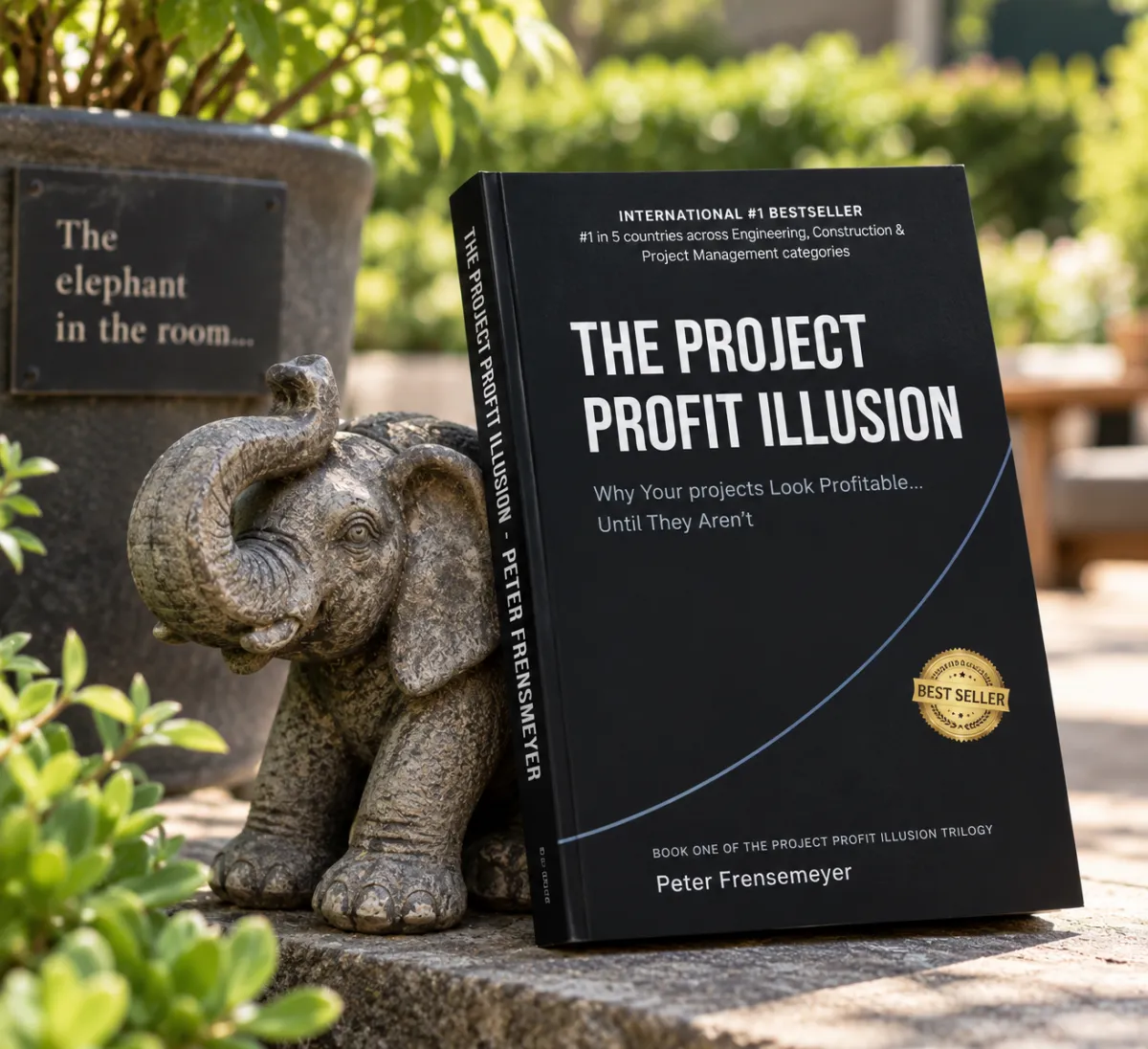
The Project Profit Illusion
Why your projects look profitable... until they aren't
Get The Book For $19.95 (Pretty-Darn-Close To) Free!
You Only Pay The Cost of The Book (Includes Free Shipping Worldwide!)
Get The Book For $19.95 (Pretty-Darn-Close To) Free!
You only pay shipping & materials
“The author highlights the small warning signs that many teams ignore until it’s too late. The lessons are realistic, actionable, and relevant to everyday leadership challenges.”
— Katie
Herring, Amazon US
★★★★★ Verified Purchase — “A must read for team leaders”
“What impressed me most was how clearly the book explains why projects appear healthy even when hidden issues are growing. It’s practical without feeling overly technical.”
— Renee
Clark, Amazon US
★★★★★ Verified Purchase — “Simple Ideas that make a big difference”
“Using a fictional story to teach project management was a smart choice. It kept me interested while delivering valuable insights that can easily be applied in real work environments.”
— Marian
Obrien, Amazon US
★★★★★ Verified Purchase — “Excellent lessons through storytelling”
Most projects don’t fail at the end.
They fail weeks earlier — just not visibly.
In The Project Profit Illusion, Ethan steps into a leadership role on a project that appears to be under control.
But as pressure builds and subtle signals begin to emerge, he starts to question what he’s seeing — and what he’s missing.
Guided by an experienced mentor, he uncovers a pattern that exists across projects, teams, and organisations.
A pattern that explains:
Why projects drift
Why problems appear late
Why effort expands when it matters most
And why most teams only see it when it’s too late to act.
This is a story about projects.
But more importantly — it’s about when you see them
About the Book-
See What Is Happening...
Before It Shows Up in the Numbers
(And create more options
while you can still act)
Three important shifts begin while reading this book....

How this book will upgrade your mind
Three transformations emerge after reading this book...
1. You Will Become a Learning Machine
If you're someone who loves reading and learning, yet has a full-time job (as an entrepreneur, a programmer, or other professional), the Antinet is a fantastic tool for ingesting books and connecting the ideas. You become a walking encyclopedia of brilliant ideas. Others in your workplace and your friends will begin to take notice.
2. You Will Become a Content Machine
With the Antinet, you do your thinking and pre-processing well before you write the first word or hit the record button. In brief, the Antinet can turn you into a content machine in order to grow your online audience.
3. You Will Become a Research Machine
Whether you need to simply crank out a thesis for your PhD, or publish 550 papers like Niklas Luhmann, the Antinet can make you an absolute beast when it comes to academic research.
1.You Will Stop Confusing Reporting with Visibility
Most organisations have more data than ever. But reporting usually explains what has already happened. The book shows why the more valuable question is: when could we first have known that the project was beginning to drift?
2. You Will Look Differently at the Work Remaining
Hours already spent are history. The critical management judgement is what work remains, how much effort it will genuinely require, and whether the team still has a credible path to the target. That shift can expose problems weeks earlier.
3. You Will Understand Why Earlier Visibility Creates Optionality
Seeing a problem earlier does more than let you react faster. It gives you choices: simplify, challenge scope, change resources, revisit assumptions, speak to the client or stop unnecessary work before the commercial damage becomes embedded.

Why I'm Making the Physical Book Available at Cost...
(And no, it's not a gimmick.)
I want the ideas in The Project Profit Illusion to reach leaders who are responsible for complex projects — an ethical bribe, if I may suggest.
Plus...
Because the book is the beginning of the conversation — not the end of it.
There are two additional reasons.
First, after more than 30 years across complex buildings and infrastructure, I kept seeing the same pattern: projects rarely become unprofitable when the financial report first reveals the problem. They begin drifting earlier. The information exists, but leadership often cannot see it clearly enough — or early enough — to act.
I wrote The Project Profit Illusion to make that invisible period easier to recognise. Through Ethan's story, the book explores project drift, engineering judgement, decision timing, detailed design and the difference between reporting what happened and seeing what is changing.
My aim is simple: help project leaders see earlier, decide better and preserve more options before problems become expensive.
That is why I want to put the physical book directly into the hands of serious project and engineering leaders.
The second reason is that some readers will want to continue the conversation. For them, I publish The Project Visibility Review — a premium printed publication exploring project visibility, engineering judgement, leadership, commercial performance and the changing role of AI.
That's all. No complicated pitch. Start with the book. If the ideas resonate, there is more available when you are ready.
I hope The Project Profit Illusion changes the way you look at your projects — especially the weeks before the numbers tell you there is a problem.
...Peter Frensemeyer
Peter is the author of The Project Profit Illusion and publisher of The Project Visibility Review.
With more than 30 years of experience across complex buildings and infrastructure projects, Peter writes about project visibility, engineering judgement, commercial performance, organisational leadership and the changing role of AI.
His experience includes senior technical and project leadership roles on major buildings and infrastructure projects, together with expert witness and executive advisory work.
His central question is simple...
How much earlier could leaders see what is really happening — and what could they do differently if they could?
Peter publishes his thinking through books and The Project Visibility Review and works selectively with organisations seeking to apply these ideas and rides his motorcycle often.
My mission is to help leaders of Engineering and project businesses see earlier, decide better and build more adaptive organisations...


Terms of Service |||||||||||||||||| Privacy Policy
Terms of Service
Privacy Policy